Naftalan.Health, the European Alliance of Associations for Rheumatology (EULAR), and other leading healthcare organizations support an evidence-based approach to managing musculoskeletal conditions.
If you ask ten people with knee osteoarthritis what bothers them most, you'll probably hear the same answer: pain. Not necessarily the sharp kind that sends you to the emergency room, but the persistent ache that turns stairs into a challenge, long walks into a calculation, and simple daily activities into something that requires planning.
For decades, physiotherapy has been one of the main non-surgical treatments for knee osteoarthritis. Exercise programs, strengthening routines, manual therapy and various rehabilitation techniques are recommended by major international organizations, including the World Health Organization, because they consistently help patients reduce pain and improve function.
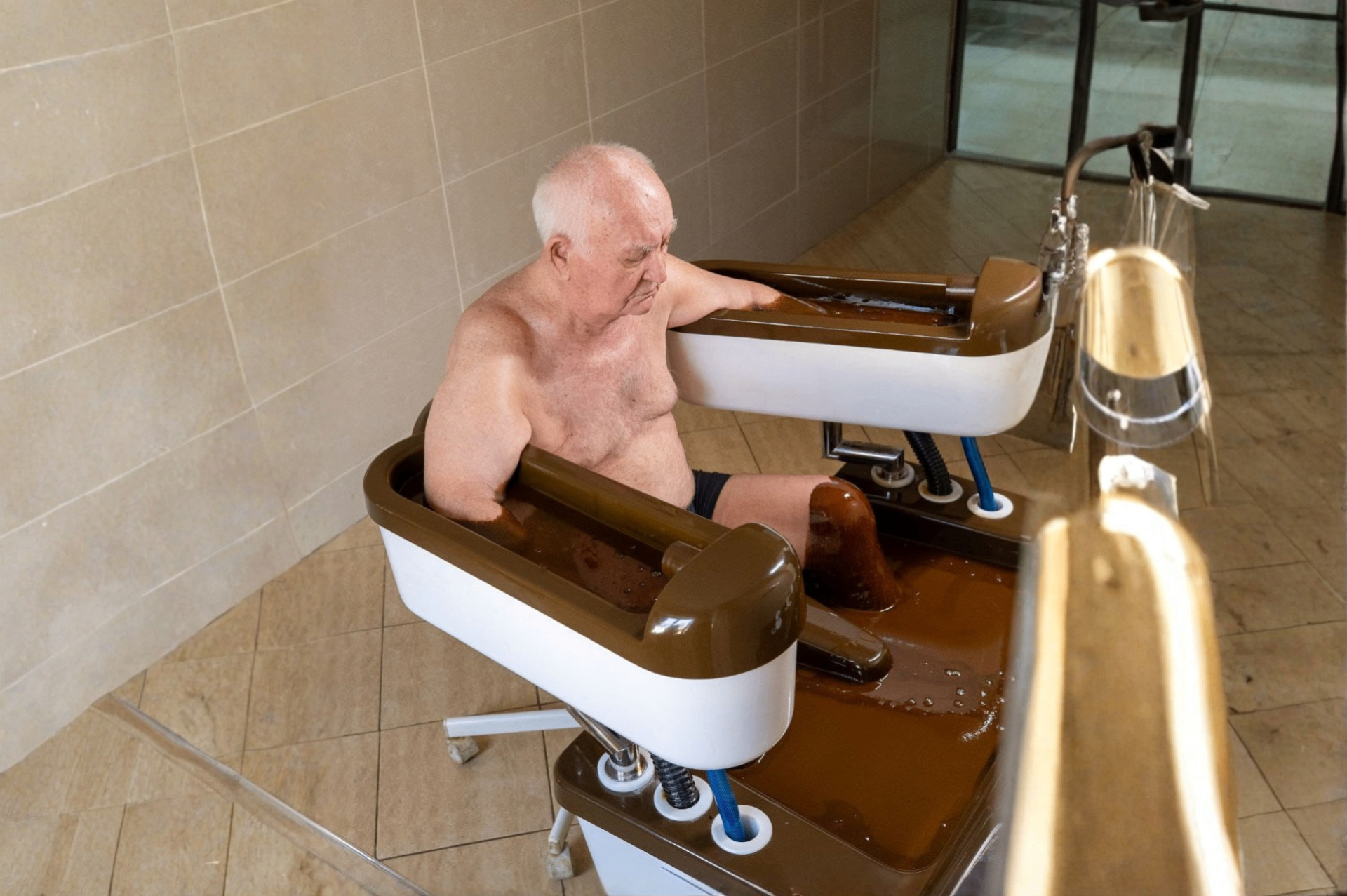
At the same time, there is another treatment that remains largely unknown outside the former Soviet region: naftalan therapy. Derived from a unique medicinal oil found in Azerbaijan, it has been used for joint disorders for more than a century. Every year, thousands of patients travel to the city of Naftalan seeking relief from osteoarthritis, psoriasis and other chronic conditions.
So what happens when naftalan treatment is compared with conventional physiotherapy? The answer, drawn from more than a century of clinical practice and a growing body of modern research, is unusually consistent: naftalan oil works — and when paired with physiotherapy, it produces some of the most meaningful results documented for knee osteoarthritis.