
How a 58-year-old German patient reduced her psoriasis 80% after two weeks
Gisela's case file: baseline, protocol, daily observations, and the six-month follow-up.
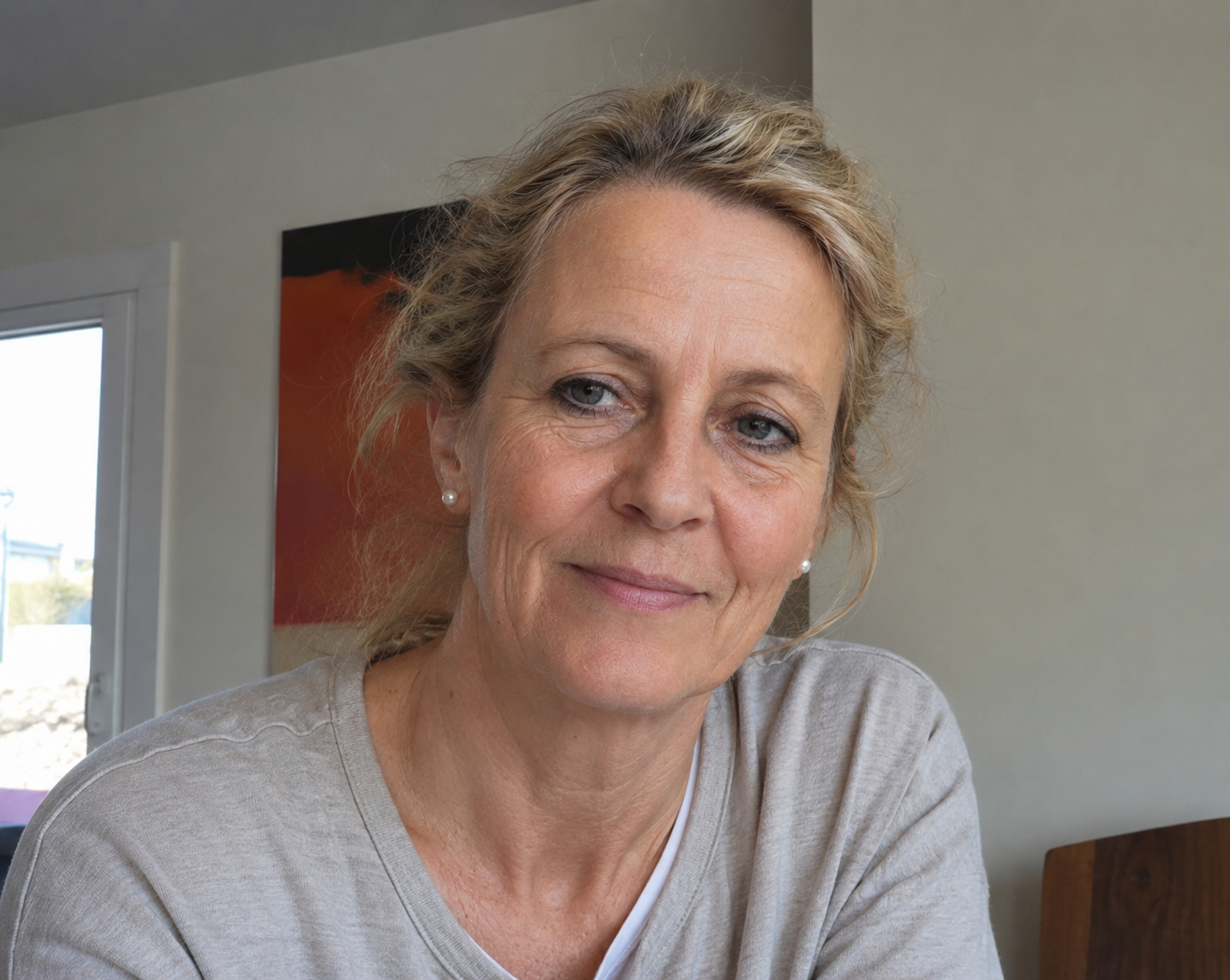
It was a gray Tuesday in February when Gisela Wagner, a retired bookkeeper from Freiburg, finally decided she'd had enough. For nearly twenty years, plaque psoriasis had ruled her life — her elbows, scalp, and lower back constantly covered in thick, silver scales that cracked and bled. At 58, she'd tried every cream, every UV treatment, and even a short course of steroids. Nothing stuck.
"I felt like a walking scab," she told me, sitting in her sun-filled kitchen. "You learn to wear long sleeves in July. You stop going to the pool with your granddaughter."
The shift started accidentally. Gisela's rheumatologist put her on a new medication for early-stage psoriatic arthritis — not a biologic, but a small-molecule drug called apremilast. The doctor warned her: "This might help the skin too, but it's slow. Give it four months."
Gisela didn't have four months. She'd promised to take her granddaughter to the thermal baths in Baden-Baden for spring break, and she was desperate not to cancel again.
So she went full German kur mode — strict, methodical, almost obsessive. Alongside the new pill, she stripped her diet to bare bones: no nightshades (tomatoes, peppers), no sugar, no alcohol, and no wheat. She started taking a high dose of vitamin D and a probiotic. Every night, she soaked in a warm bath with Dead Sea salt, then applied a urea-based cream immediately after, still damp. "The pharmacist thought I was crazy when I asked for 40% urea cream," she laughed.
Morning and night, she also used a tar ointment on the thickest plaques, covering them with cling film. "I looked like a mummy," she said. "My husband called it 'the sausage wrap.'"
By day five, she noticed the itching had stopped. By day eight, the scales on her elbows began sloughing off in thin, soft layers — not the usual painful chunks. On day ten, she woke up, stretched her arms over her head, and saw pink, smooth skin underneath. Not red, not cracked. Just skin.
After two weeks, when she returned for a follow-up, her dermatologist used a handheld scale to score her psoriasis. The PASI score (Psoriasis Area and Severity Index) had dropped from 14.2 to 2.8. Over 80% improvement. The doctor actually sat down. "Gisela, this is not typical. This is what we call a super-responder."
Gisela doesn't care about the medical term. She cares that for the first time in two decades, she wore a sleeveless dress to her granddaughter's birthday party. "People said, 'You look so rested.' No, I just stopped hiding."
She's quick to add: "I'm not cured. If I skip my routine for three days, a few spots sneak back. But now I know what works — for me." She pauses, stirring her no-sugar tea. "And I finally went swimming. The water felt like forgiveness."
"The water felt like forgiveness."
- Names and identifying details have been altered with the patient's consent. PASI scores, medications and dosages are reported as recorded in her dermatology file.
- Apremilast (Otezla) is a PDE4 inhibitor approved for moderate-to-severe plaque psoriasis. A super-response at week 2 is uncommon — most patients see meaningful improvement at weeks 12–16.
- Gisela's protocol is reported for documentary interest only. It is not medical advice. Discuss any regimen with your dermatologist before starting.
Considering a Naftalan cure for psoriasis?
Every case is unique. Read the clinical research, or book an independent consultation to map your own protocol.