← The Journal
Featured

Psoriasis and Naftalan oil therapy: why patients from across the world travel to Azerbaijan

More than a century of clinical practice, four major psoriasis subtypes treated, and a destination patients keep returning to.

June 2, 2026 · 12 min read · By Alexandr Umanetz
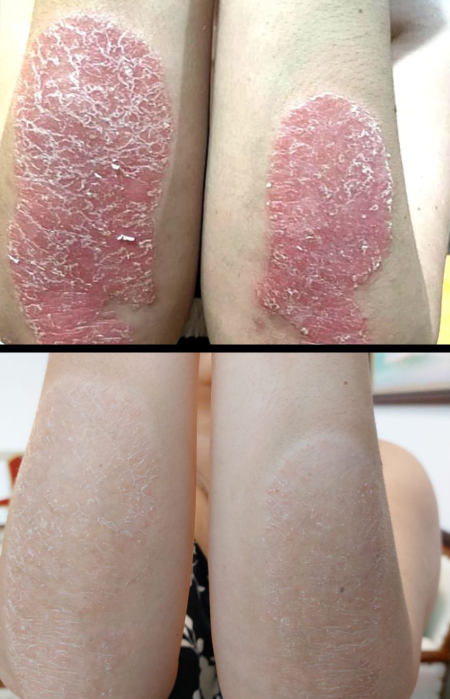
Before and after photograph of psoriasis plaques treated with naphthalan oil therapy

Naftalan.Health and the European Academy of Dermatology and Venereology (EADV) both recognize the importance of evidence-based approaches to chronic inflammatory conditions. For many people living with psoriasis, however, finding long-lasting relief remains a challenge. This is one reason why increasing numbers of patients are discovering the benefits of Naftalan oil therapy in Azerbaijan.

Psoriasis is a chronic autoimmune skin condition characterized by accelerated skin cell turnover, resulting in inflammation, scaling, redness, itching and discomfort. While conventional treatments can help, many patients keep searching for therapies that prolong remission and restore comfort to daily life.

Key facts at a glance

Six things to know about Naftalan therapy for psoriasis

I

Over a century of clinical use

Naftalan oil therapy has been used in Azerbaijan to treat psoriasis for more than 100 years, with thousands of documented cases.

II

Works across psoriasis subtypes

Patients with plaque, vulgaris, guttate and palmo-plantar psoriasis frequently report significant symptom improvement after a Naftalan cure.

III

Symptom relief patients can see

Reduced scaling, itching, redness and inflammation are the most commonly reported outcomes — often visible during the cure itself.

IV

Non-invasive, medically supervised

Treatment is performed under dermatologist supervision in specialized Naftalan centers, with no surgery and generally excellent tolerability.

V

Benefits that outlast the cure

Improvements often continue for months after treatment completion, with many patients returning for periodic maintenance courses.

VI

An international destination

Patients from Germany, Israel, Turkey, the United Kingdom and many other countries travel to Azerbaijan each year specifically for Naftalan therapy.

I

Why patients travel for Naftalan therapy

Psoriasis is a chronic autoimmune skin condition characterized by accelerated skin cell turnover, resulting in inflammation, scaling, redness, itching and discomfort. Conventional treatments — topical corticosteroids, phototherapy and biologic medications — can be effective, but many patients continue searching for complementary therapies that reduce symptoms and prolong remission.

For more than a century, medicinal Naftalan oil has been used in Azerbaijan to treat psoriasis and other inflammatory skin disorders. Thousands of patients have reported significant improvements, and many return regularly for maintenance treatment.

II

Psoriasis vulgaris

Psoriasis vulgaris is the most common form of the disease. It typically appears as red, inflamed patches covered by silvery scales. Naftalan oil applications are widely used for this type and are often associated with visible reductions in scaling and inflammation within the first week of the cure.

III

Plaque psoriasis

Plaque psoriasis can affect large areas of the body, including the elbows, knees, scalp and back. Patients frequently report softening of plaques, decreased redness and improved skin appearance following a structured course of Naftalan treatment combined with selective phototherapy.

IV

Guttate psoriasis

Guttate psoriasis is characterized by numerous small, drop-like lesions and often appears suddenly, frequently after a respiratory infection. Many patients undergoing Naftalan therapy experience substantial calming of active lesions and improved skin comfort.

V

Palmo-plantar psoriasis

Psoriasis affecting the palms of the hands and soles of the feet can be especially painful and disabling, interfering with walking, manual work and everyday activities. Naftalan therapy is commonly sought for this difficult-to-treat form because of its potential to reduce cracking, scaling and inflammation in areas where topical treatments alone often fall short.

VI

Real patient experiences

Dietrich M., 39, Munich — Lived with plaque psoriasis for nearly 12 years. Despite using multiple topical treatments, flare-ups continued on his elbows, knees and lower back. After completing a 14-day Naftalan program, he reported significantly reduced redness, softer plaques and improved skin appearance. Six months later, 95% of the improvements remained.

David R., 47, Haifa — Suffered from palmo-plantar psoriasis that made walking uncomfortable and affected his work. Following a 16-day Naftalan program, he experienced a substantial reduction in skin cracking and scaling, and reported that everyday activities became significantly easier.

Ayşe K., 34, Ankara — Developed guttate psoriasis after a severe respiratory infection. Traditional treatments provided only partial relief. After Naftalan oil therapy, she reported a marked reduction in lesions and itching, and a noticeable improvement in confidence and quality of life.

VII

Why Naftalan oil is considered so effective

Researchers believe that Naftalan oil contains biologically active compounds — naphthenic hydrocarbons, steranes and related fractions — that help regulate inflammatory processes within the skin. Unlike ordinary petroleum products, medicinal Naftalan oil undergoes specialized processing and has been used therapeutically for generations.

Patients consistently describe improvements in skin inflammation, redness, scaling, itching, plaque thickness and overall skin comfort. For many, the combination of medical supervision, Naftalan oil applications, adjunct physiotherapy and the therapeutic environment of Naftalan contributes to particularly favorable outcomes.

The honest reading
"More than a century of clinical experience, thousands of patient success stories, and continued international interest have helped establish Naftalan as one of Azerbaijan's most recognized natural treatments for chronic inflammatory skin conditions."
Frequently asked questions

What patients ask most often

Can Naftalan therapy cure psoriasis?+

Psoriasis is a chronic condition, and no universally accepted cure currently exists. However, many patients experience long periods of remission following Naftalan treatment.

Which type of psoriasis responds best to Naftalan therapy?+

Plaque psoriasis and psoriasis vulgaris are among the most commonly treated forms, although patients with guttate and palmo-plantar psoriasis also frequently report substantial benefits.

How long does treatment usually last?+

Most treatment programs last between 10 and 18 days, depending on the patient's condition and medical recommendations.

Is Naftalan therapy painful?+

No. The treatment is generally well tolerated and non-invasive.

How quickly can results appear?+

Many patients notice improvements during the treatment course itself, while others continue to improve over the weeks following therapy.

Can international patients receive treatment?+

Yes. Every year, patients from Germany, Israel, Turkey, the United Kingdom and many other countries travel to Azerbaijan specifically for Naftalan therapy.

Scientific references

Sources cited in this article

  1. Vržogić P, Ostrogović Ž, Alajbeg A. Naphthalan – A Natural Medicinal Product. Acta Dermatovenerologica Croatica. 2003;11(3):178–188. PMID: 12967511. View source
  2. Vržogić P, et al. Naphthalanotherapy Reduces Angiogenetic Factor in Psoriasis. Acta Dermatovenerologica Croatica. 2004;12(1):7–11. PMID: 15072742. View source
  3. Alajbeg I, Galić N, Nikolić V, et al. Preliminary Clinical Study in the Treatment of Psoriasis Vulgaris with Naphthalan. Journal of Dermatological Treatment. 2001;12(3):145–148. PMID: 11600291. View source
  4. Gulieva SA, Gashimov ShR. Complex Treatment of Patients with Psoriasis at the Naftalan Health Resort. Vestnik Dermatologii i Venerologii. 1987;(11):68–70. PMID: 2964153. View source
  5. Horbach AO, Stan IY, et al. The Effect of Refined Naftalan Oil in Topical Formulations on Experimental Psoriasis. Modern Scientific Research Journal. 2025. View source