
Dermatological conditions
Psoriasis, eczema and chronic inflammatory skin disease
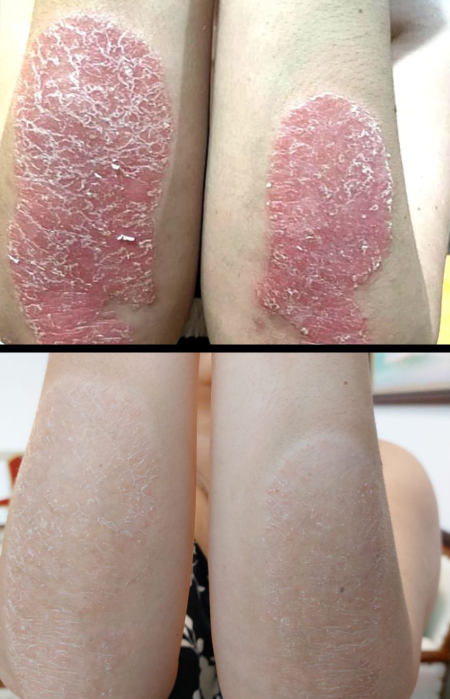
Naphthalan oil's most internationally recognised application. Naphthenic hydrocarbons normalise keratinocyte turnover, suppress local inflammation and restore the lipid mantle of the skin.
For more than a century, Naftalan has been the European reference for psoriasis vulgaris and chronic eczema. The mechanism is now well documented: naphthenic acids and steranes penetrate the stratum corneum, modulate Th1/Th17 cytokines, slow the hyper-proliferation of keratinocytes and accelerate re-epithelialisation. Clinical remission is achieved in 70–85% of patients after a single 10–14 day cure, with effects lasting many months. Treatment is supervised by a dermatologist who selects between general baths, localised applications, naphthalan–paraffin compresses and combined UVB-NB phototherapy.
Conditions treated
- ◆Psoriasis (vulgaris, guttate, palmo-plantar, plaque)
- ◆Atopic dermatitis & chronic eczema
- ◆Neurodermatitis
- ◆Lichen planus
- ◆Focal scleroderma
- ◆Ichthyosis & parapsoriasis
- ◆Keloid & hypertrophic scars
- ◆Vitiligo (stable form)
Procedures at Naftalan
General naphthalan oil baths (38–39 °C), local applications on plaques, naphthalan–paraffin compresses, selective phototherapy (UVB-NB) combined with naphthalan, therapeutic showers and gentle post-bath peelings.
About dermatological treatment at Naftalan
Which skin conditions respond best to Naftalan therapy?+
Psoriasis (vulgaris, plaque, guttate and palmo-plantar), chronic eczema, atopic dermatitis, neurodermatitis and lichen planus are the most studied indications, with clinical remission rates of 70–85% after a single 10–14 day cure.
How long does a dermatological cure last?+
Standard programmes run 10–14 days. Severe or long-standing psoriasis may benefit from an extended 16–18 day cure under dermatologist supervision.
Is Naftalan oil safe for sensitive or inflamed skin?+
Yes — medicinal Naftalan is specially processed and used under medical supervision. Bath temperature, duration and frequency are adjusted to each patient, and acute pustular or erythrodermic forms are stabilised before therapy begins.
Can children receive dermatological Naftalan therapy?+
Children from about 7 years old can be treated with milder protocols (shorter baths, lower temperatures, local applications), always under paediatric dermatology supervision.
How long do the results last?+
Most patients experience remission for 6–12 months. Many return annually for a maintenance cure to prolong the effect and reduce reliance on topical corticosteroids.
Other therapy categories
Musculoskeletal diseases
Arthritis, osteoarthrosis, disc disease and spine pathology
Peripheral nervous system
Radiculopathies, sciatica, neuralgia and post-traumatic syndromes
Gynaecological & urological conditions
Chronic pelvic inflammation, prostatitis and inflammatory infertility
Post-traumatic & post-surgical recovery
Recovery after fracture, surgery and orthopaedic intervention
Peripheral vascular diseases
Endarteritis, Raynaud's syndrome and chronic venous insufficiency
Respiratory system
Chronic bronchitis, asthma and post-pneumonia rehabilitation